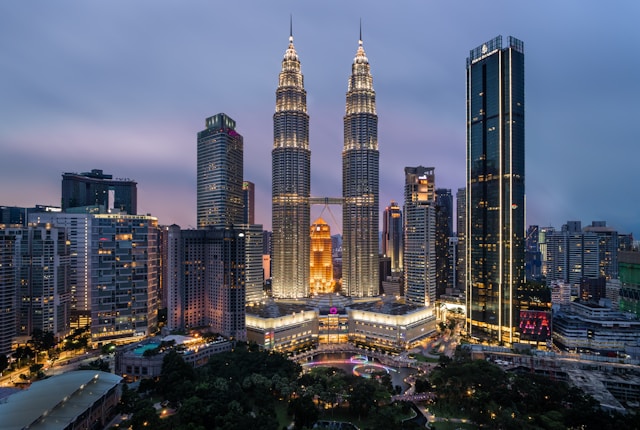

Driving in Malaysia: International Driving Document requirements for visitors
Start Express ApplicationVisitors to Malaysia need a valid international driving document alongside their valid foreign driving licence to drive legally. Malaysia accepts both the 1949 Geneva Convention and 1968 Vienna Convention permits. Malaysia drives on the left. Urban speed limit is 50 km/h, rural roads 90 km/h, and expressways up to 110 km/h. Blood alcohol limit is 0.05%.
Malaysia at a glance
- Permit type
- Geneva Convention International Driving Document
- Side of road
- Left
- How long it is valid
- 1 year from issue
- Minimum driving age
- 17 for cars; 16 for motorcycles
- Blood alcohol limit
- 0.05%
- Emergency number
- 999 (police), 994 (ambulance), 991 (fire)
How to get your permit for Malaysia
You do the first step; a dedicated expert does the rest.
Tell us your destination
Malaysia + your nationality. ~30 seconds.
We confirm what you need
A Print International Driving Document valid for 3 years, accepted under both the 1949 Geneva and 1968 Vienna conventions — picked for you, so you don't have to decide.
We handle the paperwork
Your dedicated expert checks your documents, prepares the application, and files it correctly with the authorized agency.
Review by a real person
A dedicated expert reviews your submission — not a bot.
Track every step
Live dashboard + email/SMS updates from submission until your international driving document is in hand.
Malaysia driving rules at a glance
- Side of road
- Left
- Minimum driving age
- 17 for cars; 16 for motorcycles
- Speed limit — urban
- 50 km/h
- Speed limit — rural
- 90 km/h
- Speed limit — expressway
- 110 km/h
- Blood alcohol limit
- 0.05%
- Seatbelts
- Mandatory for front-seat passengers; rear seatbelts increasingly enforced
- Helmet
- Mandatory for all motorcycle and scooter riders
- Mobile phone
- Hands-free use only; handheld use while driving is prohibited
- Emergency number
- 999 (police), 994 (ambulance), 991 (fire)
- Headlights
- Required at night and in heavy rain
Documents required to drive in Malaysia
What police and rental counters expect you to carry, every time you drive.
- Valid foreign driving licenceMust be valid and cover the vehicle class you plan to drive
- International Driving Document1949 Geneva or 1968 Vienna accepted
- PassportRequired for identification at all times
- Valid Malaysian visa or visa exemptionMost nationalities get visa-free or visa-on-arrival entry
- Vehicle registration documentsProvided by the rental company
- Third-party liability insuranceMandatory — rental cars should include basic cover
When you need a permit in Malaysia
How the requirement plays out, case by case.
Renting a car or scooter
Yes — most rental outlets ask for it — Kuala Lumpur, Penang, Langkawi, and Johor Bahru are the most common tourist rental markets
Driving a private vehicle
Yes — police may request it at stops — Carry your original licence, passport, and vehicle documents
Short tourist visit
Yes — carry alongside your foreign licence — Print permits are easiest for police checks
Staying longer than 1 year
Confirm with local authorities — Long-term residents should verify local licensing requirements with the Malaysian Road Transport Department
Frequently asked questions
Driving in Malaysia with a foreign licence, answered.
Last verified Reviewed by Expedify Compliance Review
About this service
Expedify is a private application-assistance service, not a government agency or an authorised issuer. International Driving Documents are issued by the authorised body in your licence country; our agency fee covers preparation, review, and tracking of your application, and is separate from the issuer's own fee. The information on this page is general guidance, not legal advice — acceptance rules are set by each destination country and can change. Always confirm requirements with the official issuer or the authorities of the country you're visiting.